
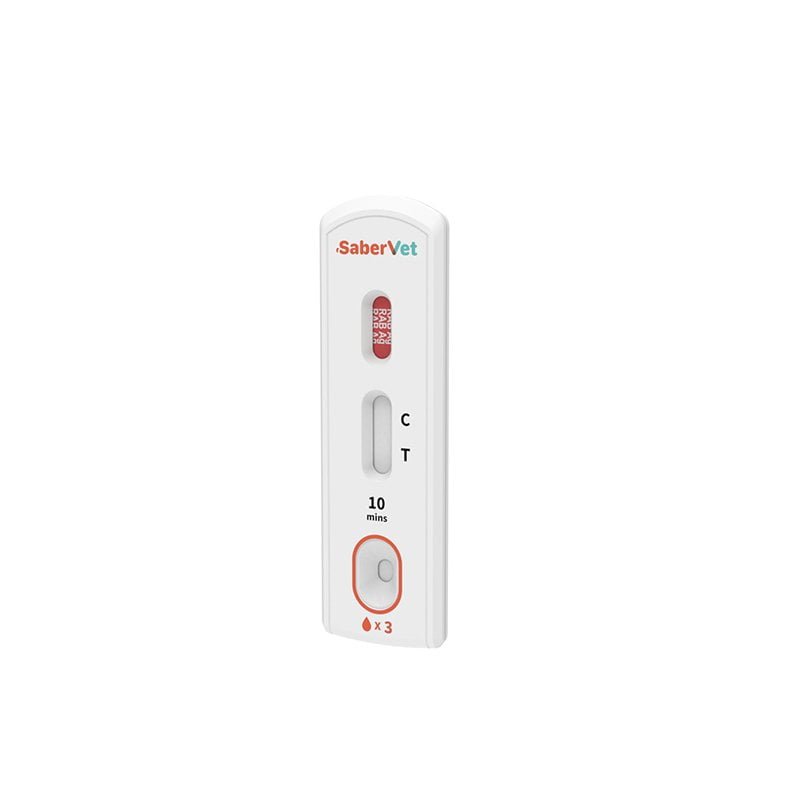
Sabervet Rabies Antigen Rapid Test
Product Overview
Sabervet RAB Ag kits are built for high sensitivity in detecting viral antigens in secretions. The simple procedure—collect, mix with buffer, and drop—eliminates the need for complex lab equipment. Each box contains 10 test devices, sterile swabs, and extraction tubes. It is a critical diagnostic asset for animal shelters, rescue groups, and veterinary hospitals located in rabies-endemic regions. Note: results should be used as part of a comprehensive clinical evaluation by qualified veterinarians.
Product Parameters
Engineered for precision, built for reliability
- Abbreviation & species
- RAB Ag; cat
- Target & method
- Rabies virus antigen; colloidal gold lateral flow immunoassay, qualitative
- Specimen
- Ocular, nasal or oral secretions
- Loading & reading
- 3 drops of extracted mixture (about 90 μL); read at 5–10 minutes, invalid after 15 minutes
- Pack size
- 10 tests per box
- Storage & operation
- Store sealed at 4–30°C away from light, do not freeze; test at 15–30°C
- Shelf Life
- See the expiration date on the package.
- Certifications
- CE, ISO 13485 & GMP certified
- OEM/ODM Service
- Available
Test Procedure
5 steps from the instructions for use
-
 1
Prepare the buffer
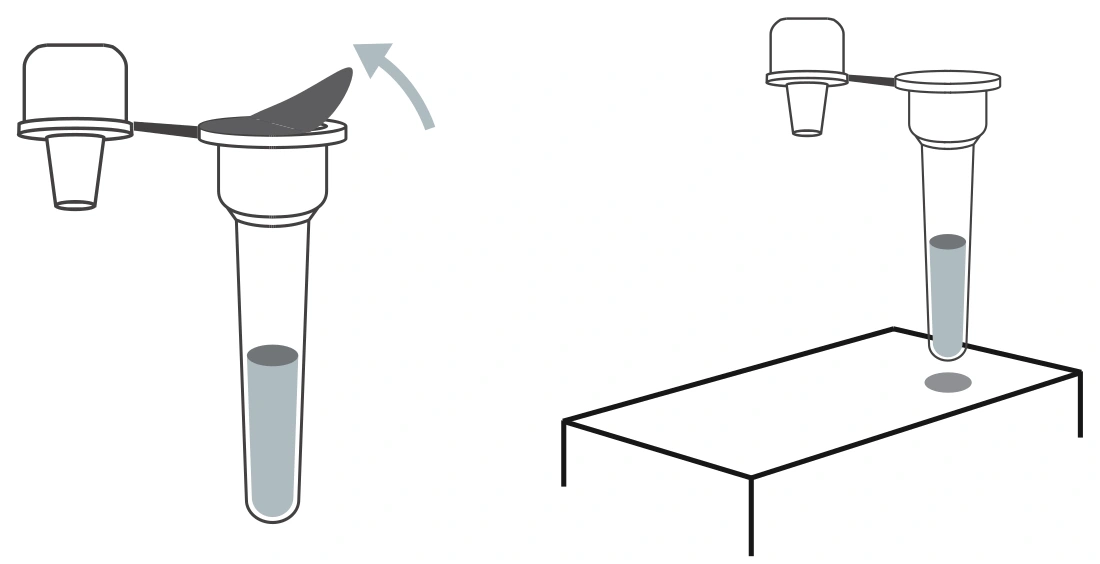
Confirm the room is at 15–30°C and check the packaging and expiry date. Open the buffer tube and place it in the workstation.
-
 2
Collect the sample
Where sampling is safe, swab ocular, nasal or oral secretions and place the swab in the buffer.
-
 3
Extract the sample
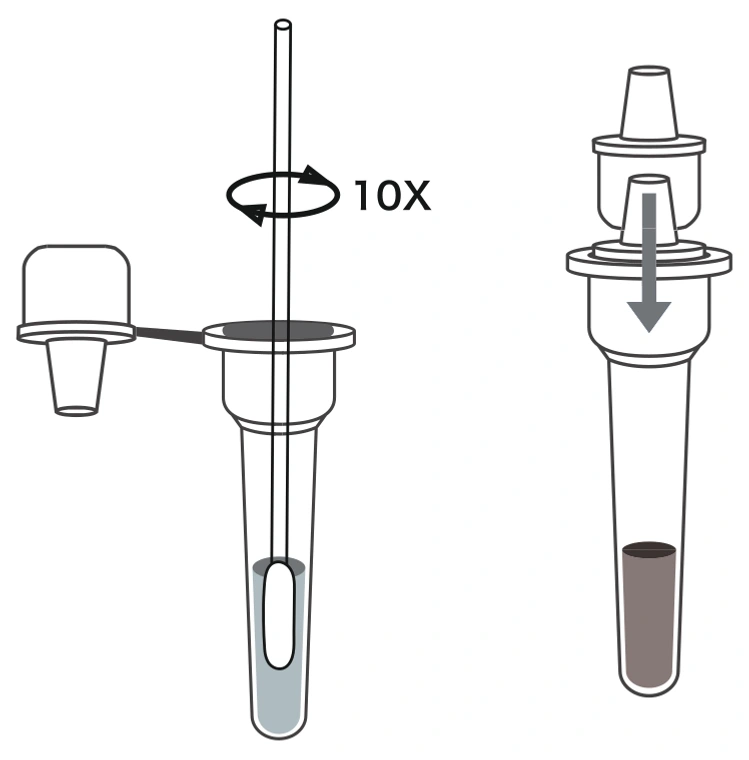
Rotate the swab in the buffer more than 10 times to release the sample, then close the cap.
-
 4
Load and time
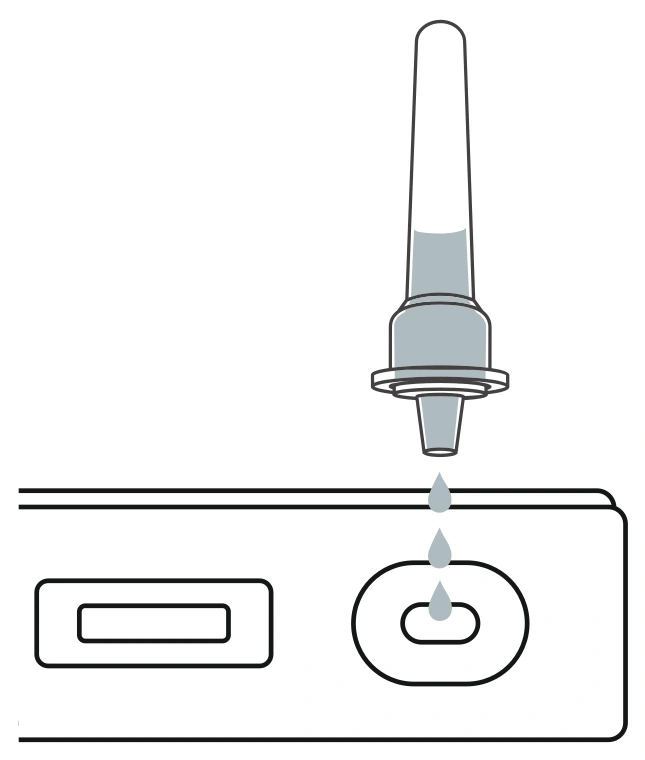
Lay the cassette flat, add 3 drops of the mixture (about 90 μL) to the S well and start timing.
-
5
Read the result
Within 5–10 minutes, first confirm the C line, then check the T line. Results after 15 minutes are invalid.
Full step-by-step instructions
- 1. Prepare the buffer Confirm the room is at 15–30°C and check the packaging and expiry date. Open the buffer tube and place it in the workstation.
- 2. Collect the sample Only where sampling has been confirmed to be safe, use the swab provided to collect ocular, nasal or oral secretions, then place the swab in the buffer.
- 3. Extract the sample Rotate the swab in the buffer more than 10 times to release the sample, then close the cap.
- 4. Load and time Lay the cassette flat on a clean bench right after opening. Add 3 drops of the mixture (about 90 μL) vertically into the S well, then start timing.
- 5. Read the result Within 5–10 minutes, first confirm the C line, then check the T line. Results after 15 minutes are invalid.
Reading the Results
Read within the time stated in the instructions for use
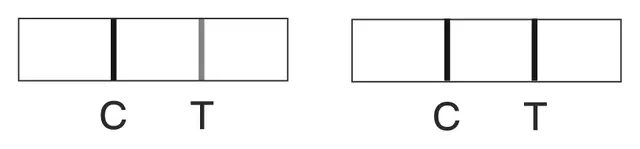
Positive
Both C and T lines appear; any visible T line is positive.
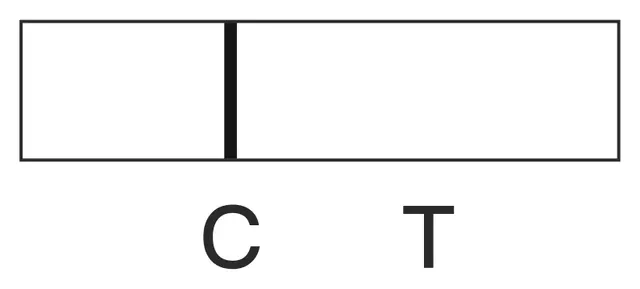
Negative
Only the C line appears: the detection level was not reached in this sample; this cannot exclude rabies or lift any risk measures already in place.
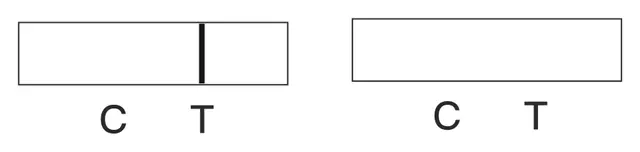
Invalid
No C line appears: invalid with or without a T line.
Interpretation notes
- Positive: Both C and T lines appear; any visible T line is positive. Contact the competent authority for the required confirmation and risk management; line intensity does not indicate infectivity or severity.
- Invalid: No C line appears: invalid with or without a T line. Check the procedure and retest with a new cassette instead of adding more liquid to the same cassette; if there is any exposure risk, follow the relevant procedure immediately.
Performance Data
Method comparison results stated in the instructions for use
| Target | Reference Method | Positive Agreement | Negative Agreement | Overall Agreement |
|---|---|---|---|---|
| RAB Ag | PCR | 95.00% 19/20 95% CI 76.39%–99.11% | 97.45% 268/275 95% CI 94.84%–98.76% | 97.29% 287/295 95% CI 94.74%–98.62% |
Figures reflect the study samples and reference methods described in the instructions for use. Interpret individual results together with clinical findings.
Kit Contents
What is supplied in each box and what you need to prepare
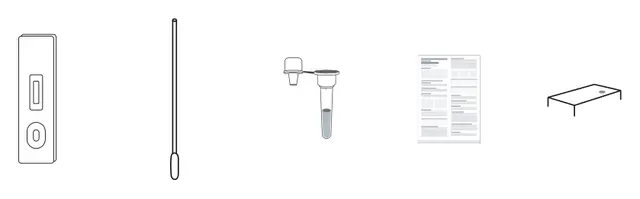
Included in the kit
- Test cassettes
- Sampling swabs
- Buffer tubes
- Instructions for use
- Workstation
Also required
Timer, sample labels, and personal protective and waste equipment appropriate to the risk level