
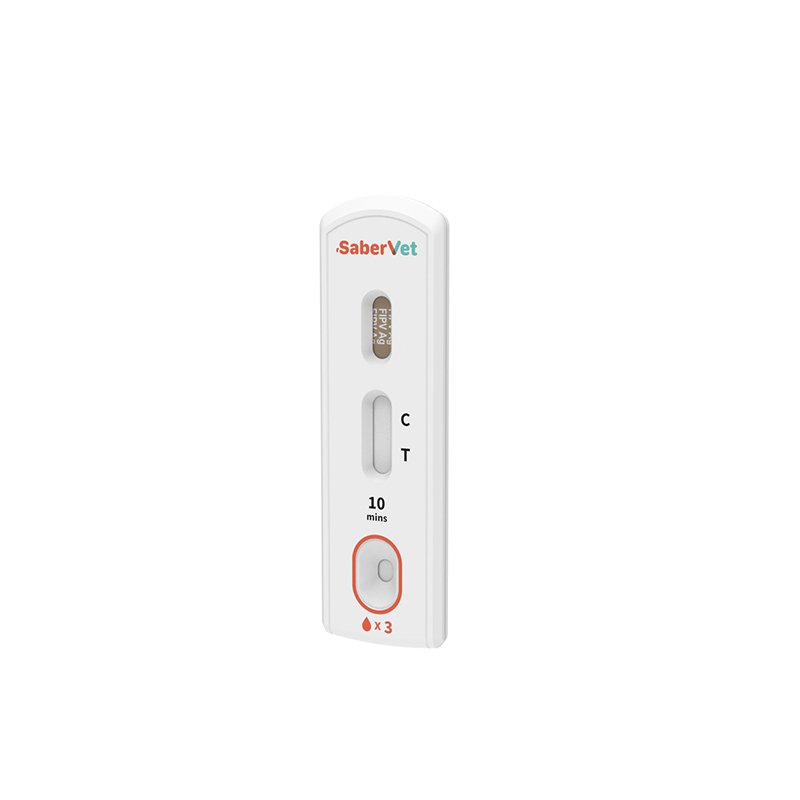
Product Overview
The SaberVet FIPV Ag Rapid Test provides professional diagnostics for Feline Infectious Peritonitis Virus. With positive agreement of 96.67%, this kit helps veterinarians identify FIPV antigen in fecal or ascites samples.
Product Parameters
Engineered for precision, built for reliability
- Abbreviation & species
- FIPV Ag; cat
- Method
- Colloidal gold immunochromatography, visual qualitative reading
- Specimen
- Fresh feces, rectal swab or ascites
- Sample loading
- Feces/swabs: extract in buffer; ascites: add about 30 μL to the buffer. After mixing, add 3 drops (about 90 μL) to the S well
- Reading time
- 5–10 minutes; results after 15 minutes are invalid
- Pack size
- 10 tests per box
- Storage & operation
- Store sealed at 4–30°C away from light, do not freeze; test at 15–30°C
- Shelf Life
- See the expiration date on the package.
- Certifications
- CE, ISO 13485 & GMP certified
- OEM/ODM Service
- Available
Test Procedure
7 steps from the instructions for use
-
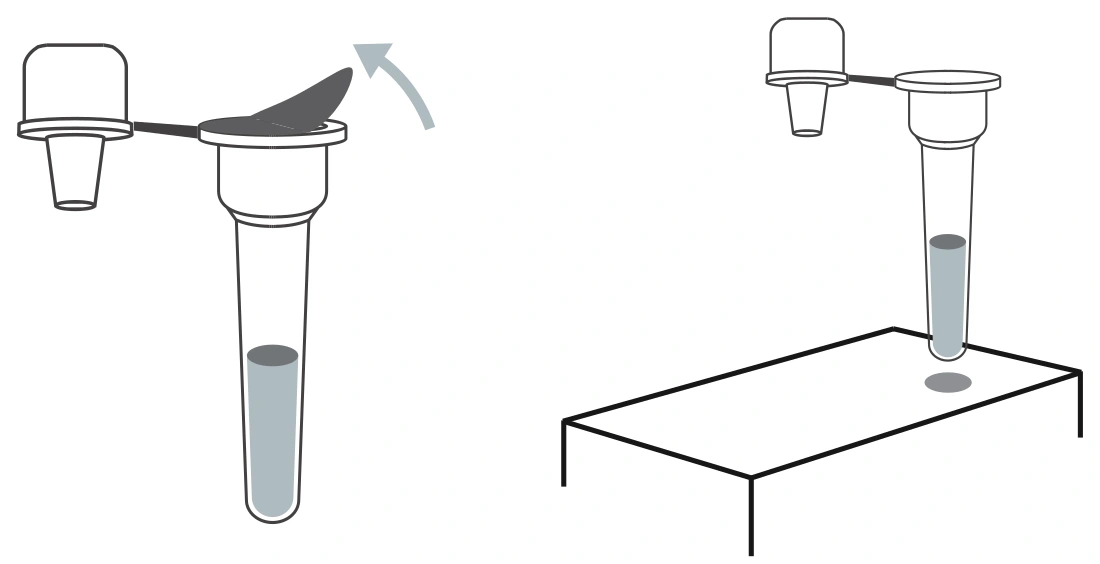 1
Prepare
At 15–30°C, open the buffer tube, place it in the workstation and lay a new cassette flat.
-
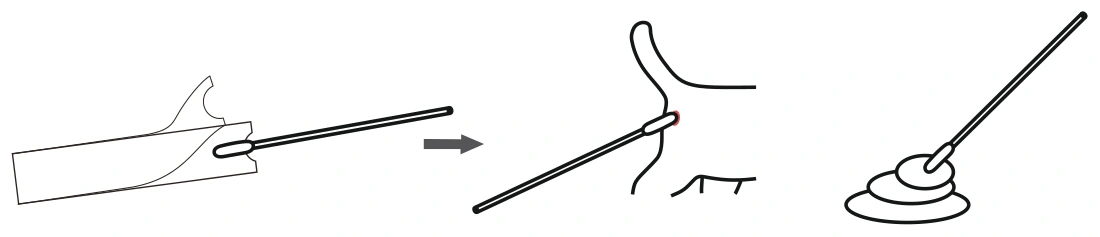 2AFeces or rectal swab
Collect the fecal sample
Swab fresh feces or take a fecal sample from the rectum.
-
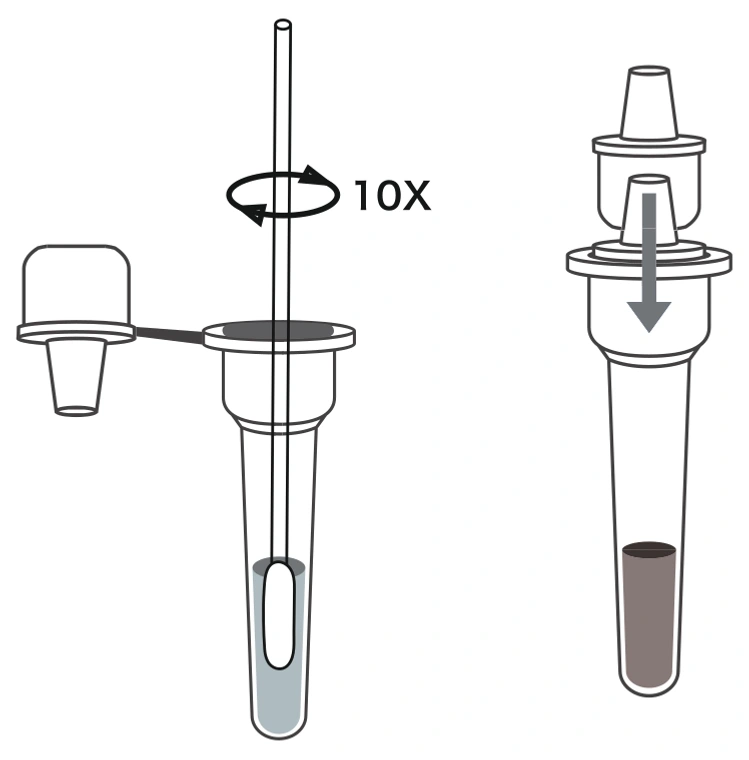 3AFeces or rectal swab
Extract the sample
Place the swab in the buffer, rotate more than 10 times, then close the cap.
-
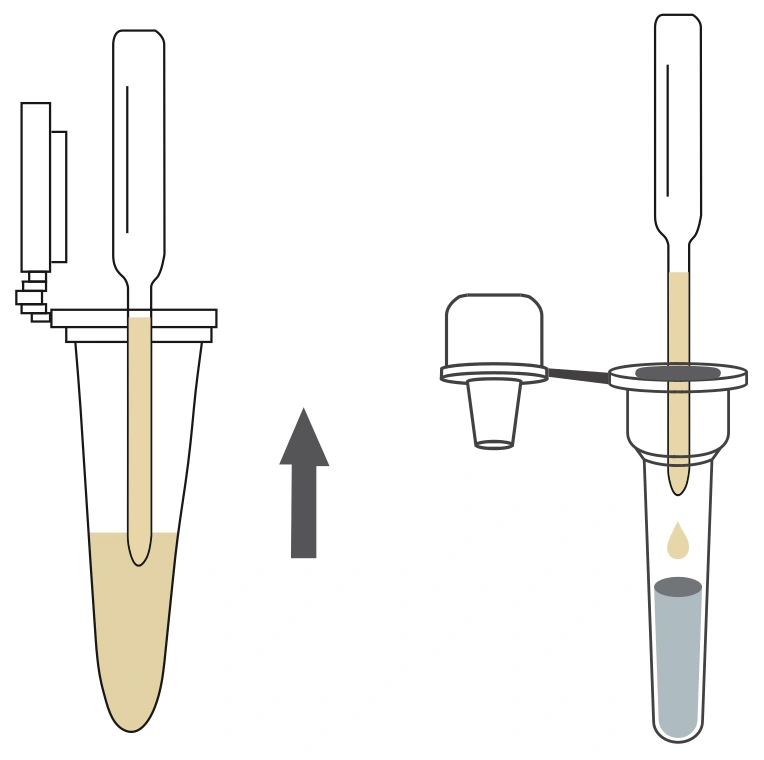 2BAscites
Add the ascites
Use the dropper provided to add 1 drop (about 30 μL) of collected ascites to the buffer tube.
-
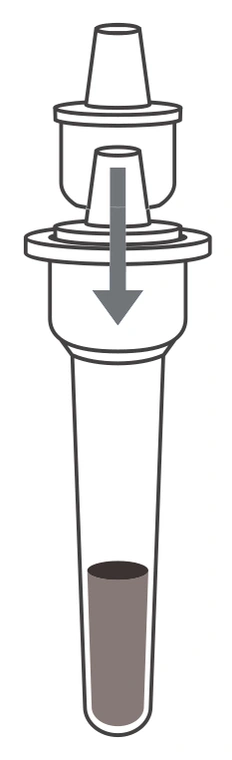 3BAscites
Mix the ascites
Close the cap and shake the extraction tube gently to mix the ascites with the buffer.
-
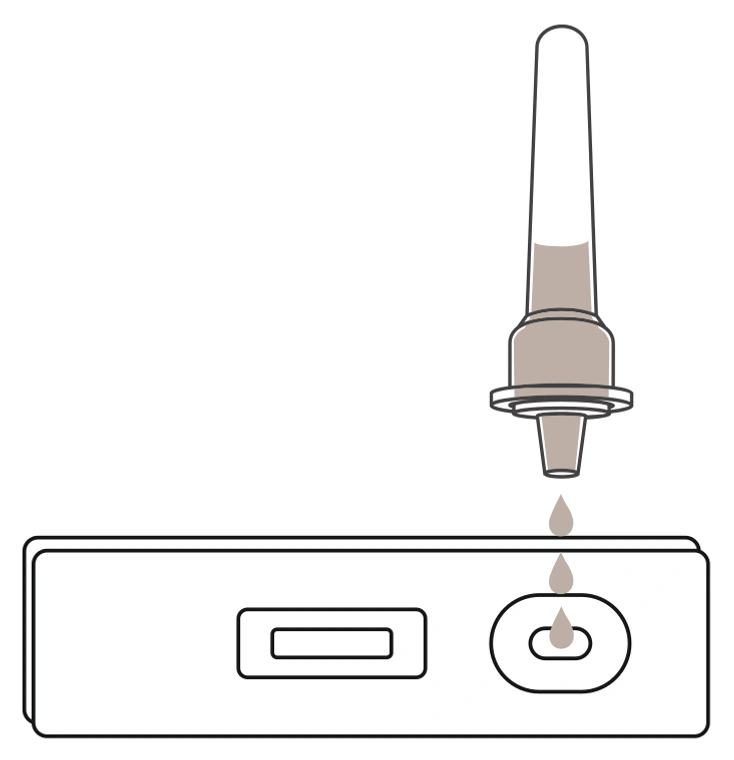 4
Load the cassette
Add 3 drops of the pre-treated mixture (about 90 μL) to the S well.
-
5
Time and read
Start timing after loading; read and record within 5–10 minutes. Results after 15 minutes are invalid.
Full step-by-step instructions
- 1. Prepare At 15–30°C, check the cat, product, lot and expiry date and that the foil pouch is intact. Open the buffer tube and place it in the workstation. Use the cassette right after opening, laid flat on a clean bench.
- 2A. Collect the fecal sample Use the swab to collect fresh feline feces, or take a fecal sample from the rectum. Use one swab per cat and avoid taking too much.
- 3A. Extract the sample Place the swab in the buffer, rotate more than 10 times, then close the cap.
- 2B. Add the ascites Use the dropper provided to add 1 drop (about 30 μL) of collected ascites to the buffer tube.
- 3B. Mix the ascites Close the cap and shake the extraction tube gently to mix the ascites with the buffer.
- 4. Load the cassette After pre-treating the sample, add 3 drops of the mixture (about 90 μL) vertically into the S well. Do not add feces or unmixed ascites directly to the cassette.
- 5. Time and read Start timing after loading; read and record within 5–10 minutes. Results after 15 minutes are invalid.
Reading the Results
Read within the time stated in the instructions for use

Positive
Both colored C and T lines appear; a faint T line within the reading time is also positive.
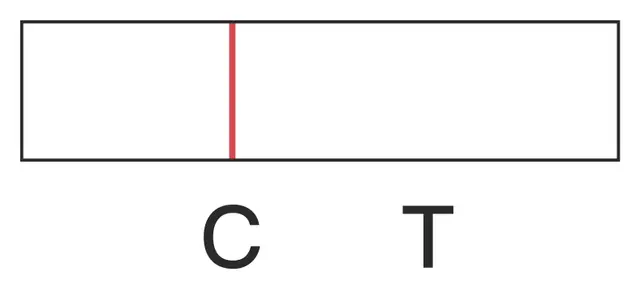
Negative
Only the C line appears: the method's detection level was not reached in this sample; further testing is still needed when there is clear clinical suspicion.

Invalid
No C line appears: invalid with or without a T line. Check the sample, pre-treatment, drop count, timing and storage/transport, then retest with a new cassette.
Interpretation notes
- Positive: Both colored C and T lines appear; a faint T line within the reading time is also positive. The antigen was detected in this sample; a fecal positive does not confirm FIP, and an ascites positive also needs other clinical evidence.
Performance Data
Method comparison results stated in the instructions for use
| Target | Reference Method | Positive Agreement | Negative Agreement | Overall Agreement |
|---|---|---|---|---|
| FIPV Ag | PCR | 96.67% 145/150 95% CI 92.23%–98.78% | 97.33% 146/150 95% CI 93.11%–99.19% | 97.00% 291/300 95% CI 94.31%–98.50% |
Figures reflect the study samples and reference methods described in the instructions for use. Interpret individual results together with clinical findings.
Kit Contents
What is supplied in each box and what you need to prepare
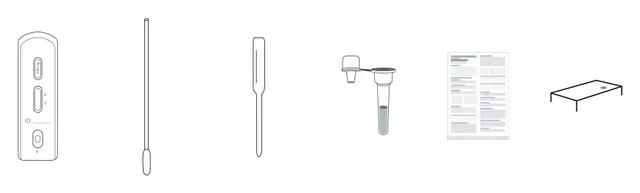
Included in the kit
- Test cassettes
- Sampling swabs
- Buffer tubes
- Disposable droppers
- Instructions for use
- Workstation
Also required
Timer, suitable sampling supplies and personal protective equipment. Ascites should be collected by a veterinarian or professional.