
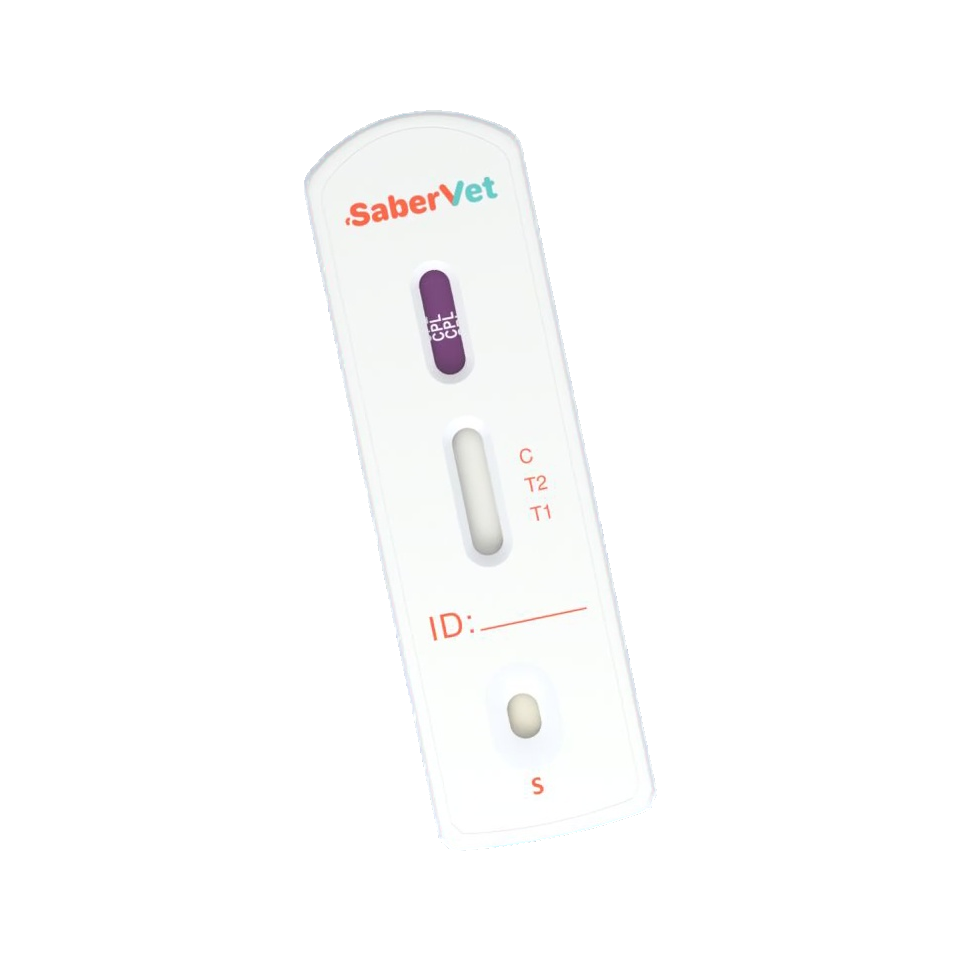
Sabervet Canine Pancreatic Lipase Rapid Test
Product Overview
Diagnosing pancreatic issues requires speed and accuracy. The SaberVet CPL Rapid Test provides a semi-quantitative assessment of Canine Pancreas-Specific Lipase levels, aiding in the assessment of pancreatic health. The unique dual-line interpretation (T1 and T2) allows for clear differentiation between normal and abnormal levels, ensuring confident clinical decisions. This professional-grade kit includes all necessary materials, such as quantitative droppers and buffer tubes, and is validated for high accuracy in clinical settings. Its room-temperature stability makes it a versatile addition to any veterinary diagnostic suite.
Product Parameters
Engineered for precision, built for reliability
- Abbreviation
- CPL
- Species
- Dog
- Targets
- Canine pancreas-specific lipase
- Method
- Lateral flow immunoassay; normal/abnormal grading
- Specimen
- Serum or plasma
- Pack size
- 10 tests per box
- Specimen & volume
- 75 μL of sample premixed with buffer, then 3 drops of the mixture (about 90 μL)
- Reading time
- 5–10 minutes; results after 15 minutes are invalid
- Storage & test temperature
- Store sealed at 4–30°C away from light, do not freeze; test at 15–30°C
- Shelf Life
- 36 months (when stored unopened at 4–30°C) / Final expiration date is indicated on the package.
- Certifications
- CE, ISO 13485 & GMP certified
- OEM/ODM Service
- Available
Test Procedure
5 steps from the instructions for use
-
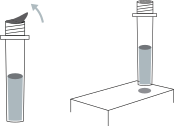 1
Prepare the buffer
Open the buffer tube and place it in the workstation.
-
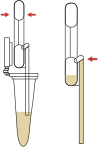 2
Draw a measured sample
Use the volumetric dropper to draw serum or plasma without air bubbles.
-
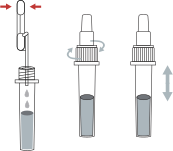 3
Mix the sample
Transfer about 75 μL of sample into the buffer tube, close the cap and mix gently.
-
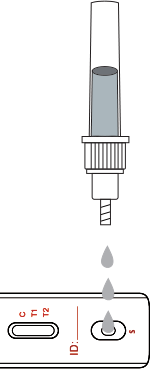 4
Sample loading
Lay the cassette flat and add 3 drops of the mixture (about 90 μL) to the S well.
-
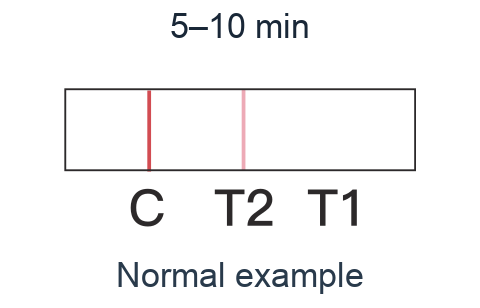 5
Time and read
Start timing after loading; read and record at 5–10 minutes. Results after 15 minutes are invalid.
Full step-by-step instructions
- 1. Prepare the buffer Open the buffer tube and place it in the workstation.
- 2. Draw a measured sample Squeeze the upper bulb of the volumetric dropper to draw serum or plasma so that a little enters the lower bulb; make sure the tube contains no air bubbles.
- 3. Mix the sample Squeeze the upper bulb again to transfer about 75 μL of sample into the buffer tube. Close the cap and shake gently to mix the sample with the buffer.
- 4. Sample loading Open the foil pouch and lay the cassette on a clean, level surface. Add 3 drops of the mixture (about 90 μL) vertically into the S well.
- 5. Time and read Start timing after loading; read and record at 5–10 minutes. Results after 15 minutes are invalid.
Reading the Results
Read within the time stated in the instructions for use
First confirm the C line, then compare the color of the T1 and T2 lines as marked on the cassette.

Abnormal
The C line appears and T1 is the same color as or darker than T2.
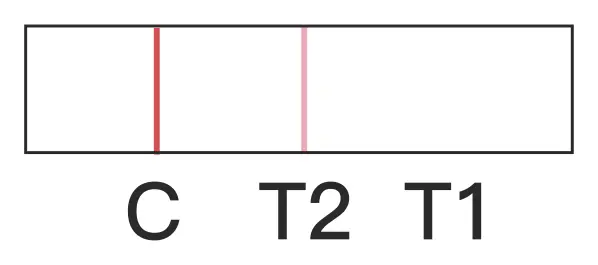
Normal
The C line appears and T1 is lighter than T2.

Invalid
No C line appears: invalid whether or not T1 and T2 appear; investigate and retest with a new cassette.
Interpretation notes
- Invalid: No C line appears: invalid whether or not T1 and T2 appear; investigate and retest with a new cassette. An abnormal result needs evaluation with the clinical signs and other tests; a normal result alone does not exclude pancreatitis. If the color comparison is unclear or conflicts with the signs, consider quantitative cPLI testing and imaging.
Kit Contents
What is supplied in each box and what you need to prepare
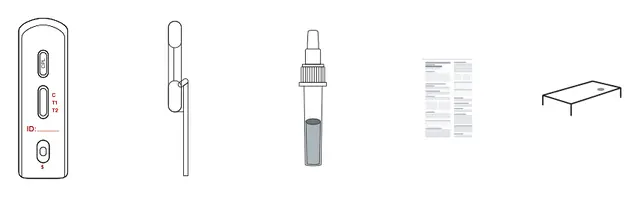
Included in the kit
- Test cassettes
- Volumetric droppers
- Buffer tubes
- Instructions for use
- Workstation
Also required
Timer